
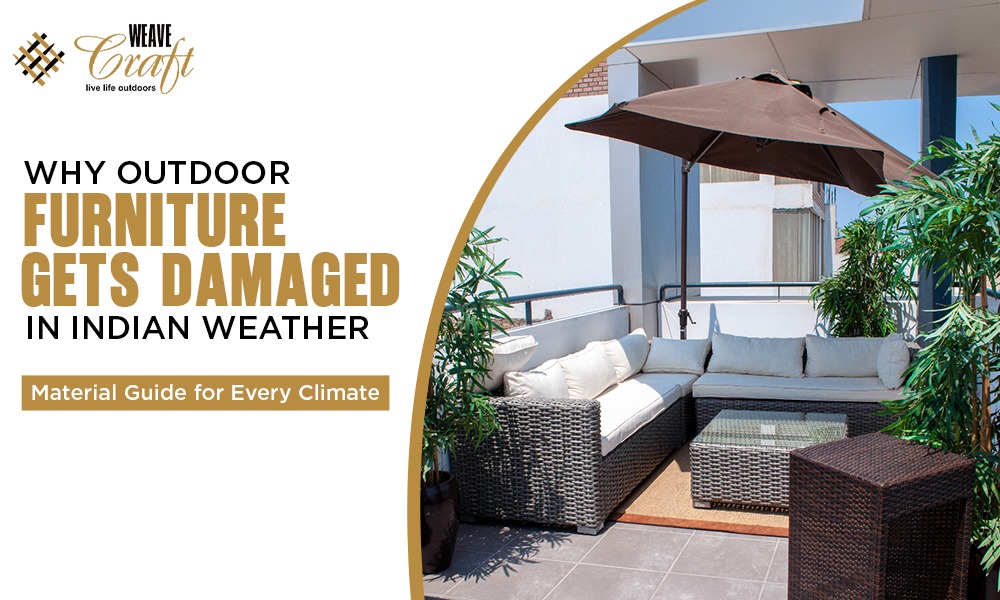
Why Outdoor Furniture Gets Damaged in Indian Weather: Material Guide for Every Climate
- Furniture| garden furniture| Outdoor Furniture
- July 18, 2026
Outdoor furniture is designed for outdoor use but not every material can withstand India’s extreme weather conditions. People often buy outdoor furniture based on design or price – not understanding how India’s heat, humidity, monsoons, dust & coastal air will affect different materials over time.
This guide explains why outdoor furniture gets damaged in Indian weather, how different climates impact every material and what you should know before making a long-term investment. Whether you’re designing a villa, rooftop, garden or resort – understanding your local climate helps you choose furniture that lasts better & longer.
Let’s first understand why India’s weather creates very different challenges for outdoor furniture across the country:-
Why Indian weather is tough on outdoor furniture
India has multiple climate zones & each one affects outdoor furniture differently. Some parts of western Rajasthan receive less than 200 mm of rainfall in a year – while parts of Meghalaya get more than 11,000 mm. Summer temperatures regularly touch 45-48°C in cities like Delhi & Jaipur – while coastal regions experience 70-90% humidity during the monsoon. These changing weather conditions expose outdoor furniture to different environmental challenges. This is why a material that works well in one region may deteriorate much faster in another:-
Coastal regions
Cities like Mumbai, Goa, Chennai and Kochi experience high humidity, heavy rainfall and salt-laden sea air throughout much of the year. Many homeowners assume rain causes the most damage. In reality, salt-laden air is often the biggest reason outdoor furniture deteriorates in coastal regions. It attracts moisture & speeds up corrosion of the metal if protective coatings are not present. On the other hand, high humidity slows drying. As a result cushions, fabrics & woven materials stay damp for a longer period of time. This creates the perfect breeding ground for mould, mildew and fungi particularly in poorly ventilated outdoor spaces
Hot & dry regions
Cities like Jaipur, Jodhpur & Ahmedabad regularly experience summer temperatures of ‘45-48°C’. Exposure to direct sunlight may make the outdoor furniture even hotter. Continuous heating during the day and cooling at night causes materials to expand and contract – gradually stressing joints, finishes & adhesives. Strong UV radiation further fades colours, weakens plastics & dries out natural wood increasing the risk of surface cracks if it isn’t properly protected. This is why furniture made with UV-resistant materials and protective finishes generally performs much better in hot and sunny regions
Urban cities
Delhi, Gurugram and Noida’s outdoor furniture has issues which go far beyond climatic conditions. There is dust from construction sites, air pollution & even particulate matter from vehicles that settle on the furniture every day. During cleaning – these small particles create tiny scratches that eventually wear down the paint. Also concrete buildings & paved terraces trap heat making balconies & rooftops much hotter than surrounding areas. This constant heat speeds up the ageing of furniture and is especially common for rooftop outdoor furniture in Delhi NCR.
High rainfall regions
In states like Kerala, Assam and across the Western Ghats – outdoor furniture often remains damp for days during the monsoon. The biggest challenge here becomes lack of drying time. Prolonged moisture encourages mould, mildew and fungal growth – while wood can absorb water and natural fibres may weaken over time. Furniture with poor drainage or trapped water points is especially vulnerable in these regions
Why one outdoor furniture material doesn’t suit every climate
No single material is perfect for every part of India. A substance that works perfectly in an arid inland city will need much more maintenance in a coastal climate. Similarly, furniture chosen only for its appearance without considering local weather often ages much faster than expected. Understanding your local weather helps you select materials that are better suited to your environment – reducing maintenance and improving long-term durability
What damages outdoor furniture? Understanding heat, rain, humidity, dust & UV exposure
Weather damage is a gradual process. Each environmental factor affects outdoor furniture differently and understanding these effects helps you choose materials that can withstand your local climate for years:-
Heat & UV radiation
India experiences some of the highest solar radiation levels in the world – particularly between March and June. During peak summer, ambient temperatures in cities like Delhi, Jaipur and Nagpur often cross 45°C, while outdoor furniture exposed to direct sunlight can easily reach 60-70°C. However, UV radiation is often more damaging than heat itself.
UV rays slowly break down paints, plastics, resins and synthetic fibres -while repeated heating and cooling cause materials to expand and contract every day. Over time, this weakens finishes and joints.
Common signs include:-
- faded or dull colours
- white or chalky patches appearing on plastic or painted surfaces
- brittle wicker or plastics
- hairline cracks on wooden surfaces
- peeling coatings
- loose joints and fittings
- outdoor fabrics losing their original colour
Metals generally expand more predictably – while wood expands and contracts depending on both temperature and moisture. These daily cycles place continuous stress on screws, welded joints, adhesives & surface finishes. Over several seasons even tiny movements can loosen fittings & create hairline cracks.
This explains why two identical furniture sets placed in shaded and fully exposed locations often age very differently
Humidity
Air with 70-90% relative humidity common during the monsoon in coastal cities – contains a large amount of moisture. Many natural materials continuously exchange moisture with the surrounding air.
For wooden furniture – this means the timber absorbs moisture during humid periods and releases it again when conditions become dry. This repeated movement can eventually cause:-
- minor warping
- surface cracks
- mould and mildew
- damp-smelling cushions
- weak stitching and adhesives
Outdoor cushions & fabrics face a different problem. Moisture trapped inside foam / fabric takes a lot of time to dry in humid weather. Even when the surface feels dry – the inner layers may still hold moisture – creating favourable conditions for mildew & mould
Standing water
Rain itself doesn’t damage quality outdoor furniture. The real issue is water that doesn’t drain away. Moisture trapped inside frames, joints or beneath cushions stays in contact with materials for much longer increasing the chances of corrosion, swelling and fungal growth.
Well-designed outdoor furniture usually includes:-
- drainage holes
- quick-drying cushions
- water-shedding surfaces
- proper ventilation
- designs that prevent water accumulation
Good drainage often matters more than simply being waterproof especially during Indian monsoons
Dust & pollution
In cities like Delhi, Gurugram and Ahmedabad, outdoor furniture constantly collects dust, construction debris and airborne pollutants. Dust isn’t just a cleaning problem. Tiny particles act like fine sandpaper during wiping and can gradually dull furniture surfaces over time. High-quality powder-coated aluminium offers a smooth, durable finish that makes regular cleaning easier and helps protect the surface from everyday wear. Bird droppings, tree sap and pollen can also stain fabrics and become harder to remove if left for too long
Coastal salt air
Homes near the sea face one challenge that inland cities don’t, i.e., salt.
Salt particles settle on furniture and continuously attract moisture from the air. This keeps metal surfaces damp for longer and speeds up corrosion especially if protective coatings are scratched. Premium powder-coated aluminium & marine-grade stainless steel perform much better in these conditions but regular cleaning is still important to remove salt deposits
Why outdoor furniture fails over time
Outdoor furniture doesn’t fail after just one summer or monsoon. Damage builds up slowly with repeated exposure to heat, UV rays, humidity, dust and rain affecting the materials season after season.
That’s why long-term durability depends on two things:-
- choosing materials that suit your local climate
- following simple maintenance practices throughout the year
Understanding how different materials respond to Indian weather makes it much easier to invest in furniture that stays attractive and functional for years
Which outdoor furniture materials perform the best in different Indian climates
The lifespan of outdoor furniture depends as much on the material as the climate it’s exposed to. Here’s how the world’s most commonly used outdoor furniture materials respond to different Indian weather conditions and where each performs best.
Outdoor furniture materials compared across different Indian climates
| Material | Performs best in | Needs more care in | Maintenance level | Why it performs this way |
| Powder-coated aluminium | coastal cities, humid regions, rooftops, rainy climates | when coating gets deeply scratched | low | naturally forms a protective oxide layer and doesn’t rust like steel. Powder coating adds another barrier against moisture and UV exposure |
| Stainless steel | urban homes, moderate climates, partially covered spaces | coastal areas if standard grades are used | medium | corrosion resistance depends on the grade. Marine-grade stainless steel performs much better near the sea than standard stainless steel |
| HDPE wicker | almost every Indian climate | rarely problematic if genuine HDPE is used | low | UV-stabilised, moisture resistant and designed to withstand outdoor exposure without becoming brittle easily |
| Teak wook | most Indian climates | requires occasional maintenance to preserve colour | medium | rich natural oils make teak naturally resistant to moisture, insects and weathering. It weathers beautifully over time |
| Outdoor rope | coastal and humid regions when made from premium synthetic fibres | low-quality rope exposed to intense UV | low to medium | modern outdoor ropes dry quickly but their durability depends heavily on fibre quality and construction |
Why some outdoor furniture materials last longer than others
Every outdoor material has its own strengths because of its physical and chemical properties:-
Powder-coated aluminium
Aluminium is one of the most preferred materials for premium outdoor furniture because it naturally forms a thin oxide layer that protects it from corrosion. Unlike iron or mild steel – it doesn’t develop rust.
A high-quality powder-coated finish adds another protective barrier against UV rays, rainfall and humidity, making it particularly suitable for coastal and monsoon-prone regions.
However, not all aluminium furniture performs the same. The alloy grade, wall thickness, welding quality, surface preparation & powder coating process all influence long-term durability. For e.g, powder coating lasts much longer when applied over properly pre-treated aluminium than on poorly prepared metal
Teak
Among natural woods, teak continues to be one of the most reliable choices for outdoor environments.
Its high concentration of natural oils and dense grain help reduce moisture absorption – making it more resistant to fungal growth, termites and weathering than many other hardwoods. Over time, untreated teak gradually develops a silver-grey patina – a natural ageing process that affects appearance rather than structural strength.
This is why teak has traditionally been used in marine applications, luxury outdoor furniture and premium landscape projects around the world
HDPE wicker vs natural wicker
Natural wicker is woven from plant fibres such as rattan / bamboo / cane. While attractive, these fibres absorb moisture, making them better suited for covered outdoor spaces than areas exposed to constant rain. This is an important difference to understand when comparing garden furniture in India online – as products with a similar appearance may use completely different materials.
HDPE wicker, on the other hand, is engineered specifically for outdoor use. Quality HDPE contains UV stabilisers that improve – resistance to sunlight, fading, moisture and cracking.
The manufacturing quality also matters. Premium HDPE wicker performs very differently from low-grade PVC or plastic wicker which often becomes brittle and fades much sooner under prolonged Indian sunlight
Outdoor fabrics are engineered
Frames usually receive the most attention but cushions and fabrics are often the first parts of outdoor furniture to show signs of ageing.
Premium outdoor fabrics such as solution-dyed acrylic and olefin are manufactured differently from standard upholstery fabrics. Because the colour is added during fibre production rather than after weaving – they offer much better resistance to UV fading.
Similarly, quick-drying foams, breathable fabrics and weather-resistant stitching help reduce moisture retention, mildew and unpleasant odours during the monsoon.
Like furniture frames, fabric quality matters just as much as the material itself. Outdoor fabrics treated for UV resistance, moisture protection and mildew control generally last much longer than ordinary upholstery used outdoors
How to make outdoor furniture last longer in Indian weather
Even premium outdoor furniture benefits from simple maintenance that takes very little time but significantly improves its lifespan:-
- rinsing furniture occasionally in coastal areas to remove salt deposits
- cleaning dust before wiping surfaces to avoid abrasion
- keeping cushions dry when not in use during prolonged rainfall
- inspecting powder-coated surfaces for chips or scratches
- applying recommended care products to natural wood when required
- ensuring proper drainage around furniture placed on terraces or lawns
Choosing the right outdoor furniture for your climate
There is no single outdoor furniture material that works best everywhere in India. The right choice depends on your – local climate, the level of exposure and how the space will be used. Understanding these factors before buying helps you invest in furniture that stays beautiful, comfortable & durable for years.
At Weave Craft, we believe every outdoor project is different. With 25+ years of expertise in designing premium outdoor living spaces – we help homeowners, architects and hospitality businesses choose furniture based on climate, location and intended use rather than recommending the same material for every project.
Here’s what sets our outdoor furniture apart:-
- rust-resistant powder-coated aluminium – frames built for outdoor use
- premium HDPE wicker – that stays strong in sun, rain and humidity
- weather-resistant outdoor fabrics and quick-drying cushions – designed for Indian summers & monsoons
- durable finishes & expert craftsmanship – built for long-term outdoor performance
- custom solutions for villas, farmhouses, resorts, cafes, hotels and premium residential spaces
When outdoor furniture is designed with the right materials – thoughtful engineering and climate in mind, it becomes a long-term investment. That’s the approach we follow with every outdoor space we create.
Recent Posts
- How to Choose and Maintain Cane Furniture for Outdoor Spaces in India September 16, 2026
- How to Choose Luxury Outdoor Furniture for an Indian Villa September 16, 2026
- Which Outdoor Furniture Is Easiest to Maintain in Noida’s Dusty and Humid Weather? August 20, 2026
- The Best Outdoor Furniture in Mumbai for Small Balconies, Rooftops and Compact Urban Homes August 13, 2026
- How Luxury Resorts in India Design Premium Poolside Spaces with Outdoor Furniture July 28, 2026
Categories
- Blog
- Cane Furniture
- Creative
- Design
- Furniture
- garden furniture
- Gazebo table and chairs
- luxury outdoor furniture
- News
- outdoor balcony furniture
- Outdoor Cane Furniture
- outdoor dining
- Outdoor Furniture
- outdoor garden furniture in India
- Outdoor Gazebo Furniture
- Outdoor Patio Umbrella
- outdoor sofa set
- Rattan Chairs Online
- Retractable Roofs
- Roofing
- Rope Furniture
- Synthetic Woven Furniture
- Uncategorized
- Wicker Furniture